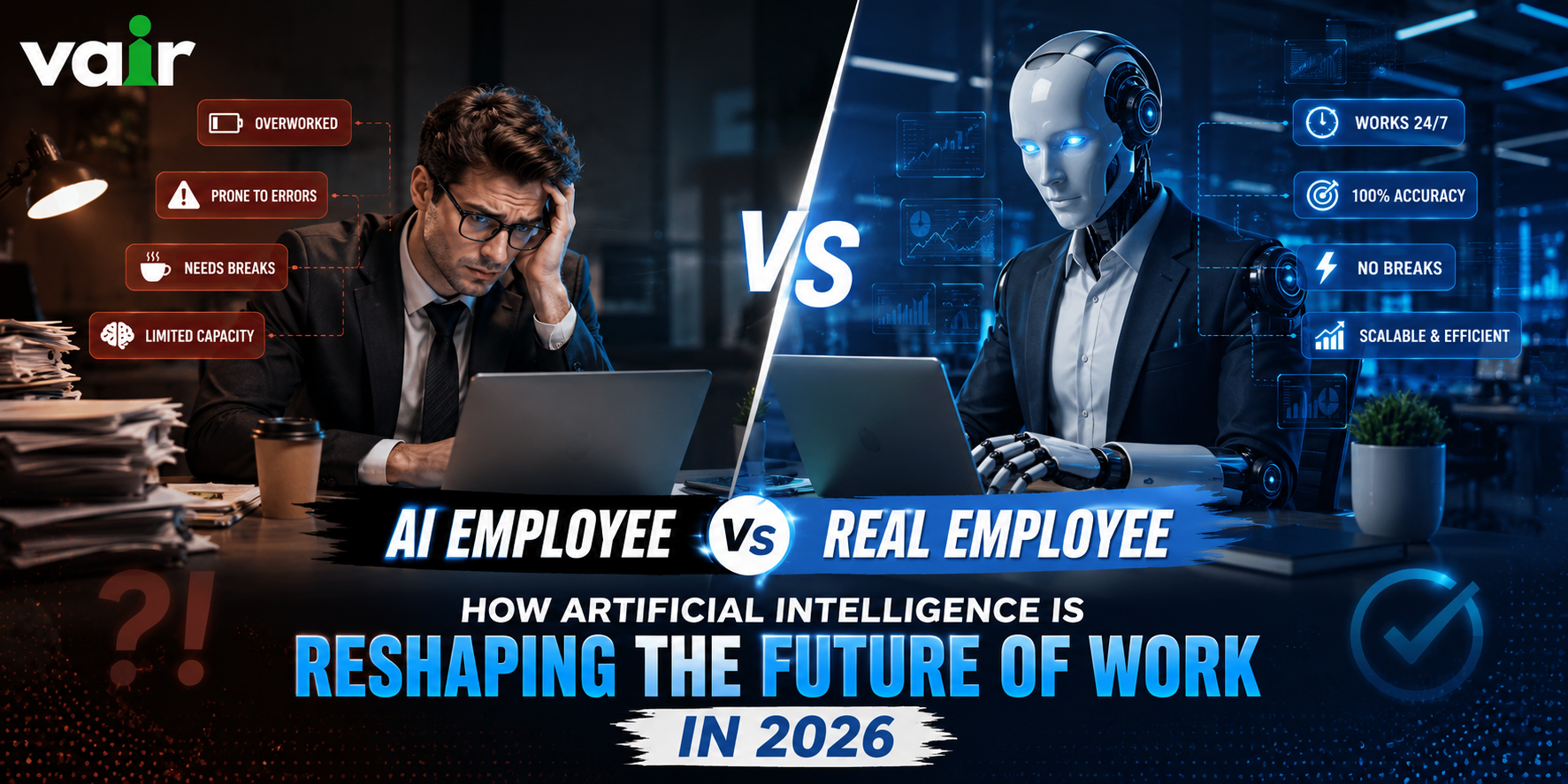
The modern workplace is entering a new phase of evolution, driven by rapid advancements in artificial intelligence and digital innovation. Artificial Intelligence (AI) is no longer limited to chatbots, virtual assistants, or basic automation tools. Businesses worldwide are now exploring a new concept called AI Employees, intelligent digital systems capable of performing tasks, analyzing information, automating workflows, and supporting teams like virtual coworkers.
With the rapid growth of AI platforms such as Viktor AI and other business automation solutions, companies are now asking an important question:
Will AI employees replace real employees in the future?
The answer is more complex than simply choosing between humans and machines. AI employees and human employees have different strengths. While artificial intelligence can process information faster, automate repetitive tasks, and analyze large amounts of data, humans bring creativity, emotional intelligence, strategic thinking, and real-world experience.
The next generation of work will not be defined by machines taking over human roles. Instead, it will be shaped by intelligent collaboration between people and AI systems, creating a powerful partnership between Artificial Intelligence and Human Intelligence.
What Is an AI Employee?
An AI employee is an advanced artificial intelligence system designed to complete tasks that are normally performed by human workers.
Unlike traditional software applications that require users to manually operate different functions, AI employees can understand instructions, analyze information, and perform actions automatically.
AI employees can help businesses with:
- Creating reports
- Analyzing business data
- Managing workflows
- Customer support assistance
- Marketing research
- Content generation
- Documentation
- Administrative activities
- Process automation
For example, a company can ask an AI employee to prepare a sales report, analyze customer feedback, or summarize business performance without manually collecting and processing information.
AI employees work as digital assistants that help organizations save time, improve productivity, and optimize daily operations.
What Is a Real Employee?
A real employee is a human professional who contributes skills, experience, creativity, and decision-making abilities to an organization.
Human employees provide qualities that artificial intelligence cannot fully replicate:
- Emotional understanding
- Leadership
- Creativity
- Communication skills
- Problem-solving abilities
- Personal relationships
- Strategic thinking
Employees understand business situations beyond numbers and data. They can communicate with customers, manage teams, handle unexpected challenges, and create innovative ideas.
AI Employee vs Real Employee: Major Differences
1. Speed and Performance
AI employees can complete data-related tasks extremely quickly. They can analyze thousands of records, generate summaries, and process information within seconds.
Human employees may require more time, but they bring experience, judgment, creativity, and practical understanding to their work.
Key Takeaway: AI excels in speed and automation, while humans excel in innovation, creativity, and strategic thinking.
2. Working Hours
AI employees can operate continuously without breaks, holidays, or limitations. Businesses can use AI systems for automated monitoring, reporting, customer assistance, and workflow management at any time.
Human employees require proper working hours and rest, but they contribute emotional intelligence, communication skills, and personal interaction.
3. Creativity and Innovation
AI can generate ideas by analyzing existing information, patterns, and available data. However, human creativity comes from imagination, emotions, experiences, and personal perspectives.
Example:
An AI tool can suggest marketing topics, but a human marketer understands brand personality, audience emotions, storytelling, and customer psychology.
4. Decision-Making Ability
AI employees can provide valuable insights based on data analysis, but humans are still required to make important business decisions.
Business decisions involve:
- Risk management
- Leadership
- Experience
- Market understanding
- Human impact
Human professionals remain essential for strategic planning and complex decision-making.
Benefits of AI Employees
1. Automating Repetitive Tasks
Many businesses spend valuable time completing repetitive activities that require manual effort.
AI employees can handle:
- Data entry
- Report creation
- Scheduling
- Research
- Information organization
By automating these processes, employees can focus on higher-value responsibilities that require creativity and decision-making.
2. Increased Productivity
AI automation helps businesses complete tasks faster and improve overall efficiency.
Organizations can achieve better productivity by allowing AI systems to support daily operations, reduce manual workload, and streamline business processes.
3. Smarter Data Processing and Insights
Every business collects large amounts of information through daily operations, customer interactions, and digital platforms.
AI employees can analyze this information quickly, identify hidden trends, and provide actionable insights that help companies make faster and more accurate decisions.
AI-powered insights include:
- Customer behavior
- Sales performance
- Market trends
- Business opportunities
This enables organizations to make informed and data-driven decisions.
Benefits of Real Employees
1. Human Connection
Businesses depend on relationships and communication. Human employees can understand emotions, communicate effectively, and build trust with customers, partners, and team members.
2. Problem Solving
Real-world challenges often require creativity, experience, and critical thinking.
Human professionals can evaluate situations, consider multiple factors, and create practical solutions based on their knowledge and expertise.
3. Leadership and Team Building
Successful organizations require leaders who can motivate teams, develop strategies, and build a strong company culture.
Leadership, inspiration, and emotional connection remain unique human abilities.
Can AI Employees Replace Human Employees?
AI employees are changing the workplace, but complete replacement of humans is unlikely.
Instead, AI will transform many job roles and change how people work.
Employees who previously spent hours completing manual tasks will use AI tools to improve efficiency and focus on more important responsibilities.
Examples:
- Developers can use AI for coding assistance while focusing on complex technical solutions.
- Marketers can use AI for research while creating creative strategies.
- Sales teams can use AI for customer analysis while building strong relationships.
The future workplace will be based on collaboration between humans and artificial intelligence.
Why Businesses Should Adopt AI Employees in 2026
Businesses adopting AI solutions can benefit from:
Faster Operations
AI reduces the time required for repetitive tasks.
Lower Operational Costs
Automation helps optimize resources and reduce manual effort.
Improved Accuracy
AI minimizes errors in repetitive processes and data handling.
Better Decision Making
AI provides actionable insights based on business data.
Higher Employee Productivity
Employees can focus on creativity, innovation, and strategic planning.
The Future of Work: AI and Humans Together
The future will not be controlled by artificial intelligence alone. Successful companies will create hybrid workplaces where humans and AI systems work together.
AI Will Handle
- Automation
- Data processing
- Research
- Repetitive operations
Humans Will Handle
- Creativity
- Leadership
- Innovation
- Relationships
- Strategic decisions
Together, they will build smarter, faster, and more productive organizations.
Conclusion
The discussion around AI Employee vs Real Employee is not about deciding which one is better. Both have unique capabilities and strengths.
AI employees provide speed, automation, and advanced data analysis. Human employees provide creativity, emotional intelligence, leadership, and innovation.
The companies that successfully combine AI technology with human talent will be better prepared for the future.
The Future Is Collaboration
A future where human intelligence and artificial intelligence work together to create smarter possibilities.
Frequently Asked Questions (FAQs)
1. What Are AI Employees and How Do They Help Businesses?
AI employees are artificial intelligence-powered digital systems designed to perform business tasks, automate workflows, analyze information, and support human teams.
2. Are AI Employees Better Than Human Employees?
AI employees excel at automation, data processing, and repetitive tasks, while human employees are stronger in creativity, communication, leadership, and strategic thinking.
3. Will AI Employees Replace Human Jobs?
AI will transform many roles, but it is more likely to complement human workers than completely replace them.
4. What Tasks Can AI Employees Perform?
AI employees can assist with data analysis, reporting, research, workflow automation, documentation, and customer support.
5. Why Are Companies Adopting AI Employees?
Businesses use AI employees to improve productivity, automate repetitive work, reduce costs, and make better decisions using data.
6. Can Small Businesses Use AI Employees?
Yes. AI tools help small businesses automate operations, improve efficiency, and compete more effectively.
7. What Skills Will Humans Need in an AI-Powered Workplace?
Professionals should develop creativity, critical thinking, communication, problem-solving, AI literacy, and collaboration skills.
8. What Is the Future of AI Employees?
The future of AI employees is centered on collaboration, helping people work faster, make better decisions, and increase overall productivity.