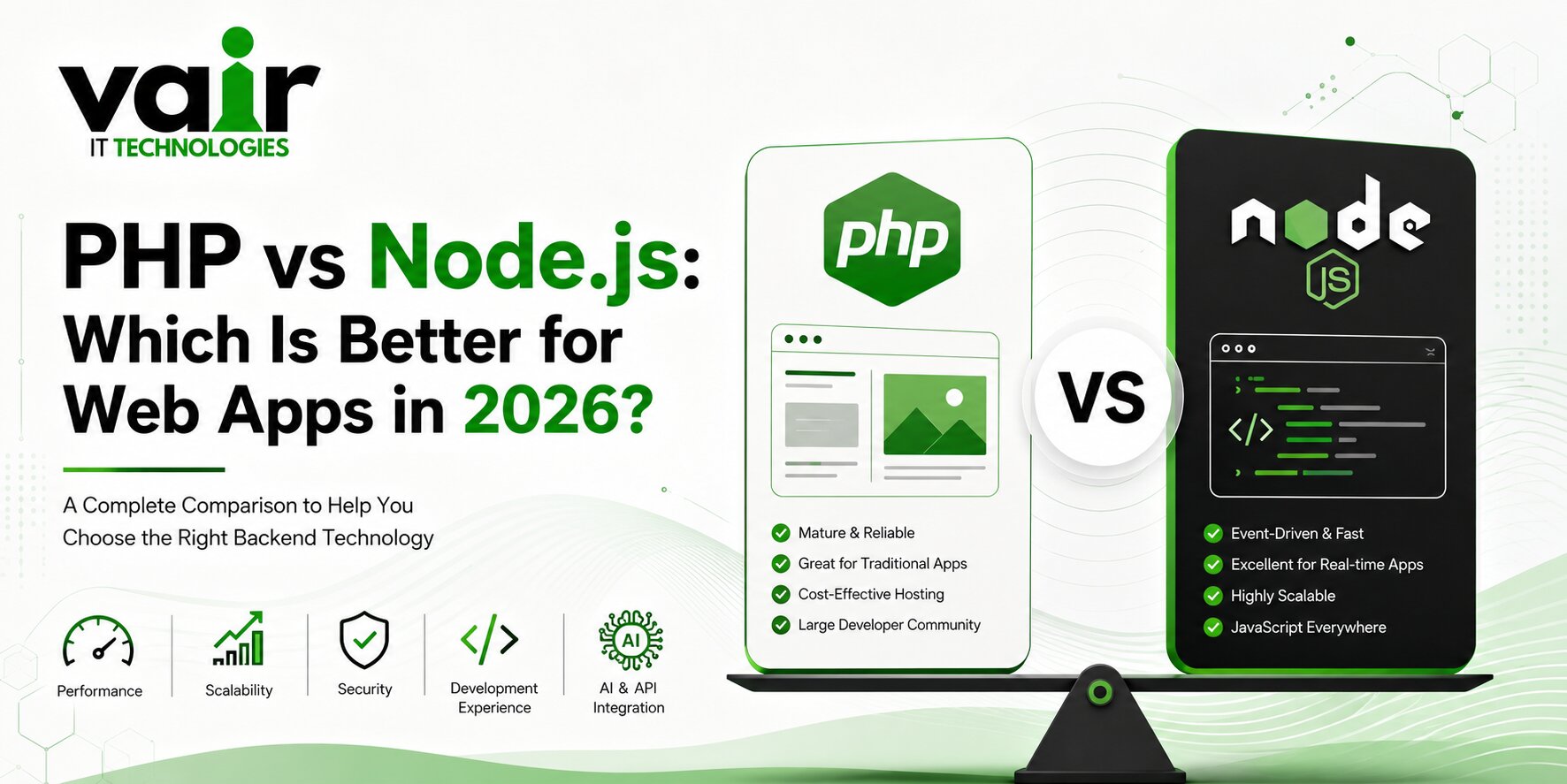
Selecting the right backend technology is one of the most important decisions when developing a web application. In 2026, PHP and Node.js remain two of the most popular choices, each offering unique advantages depending on the project requirements.
PHP has been the backbone of web development for decades, powering platforms like WordPress, Laravel, Magento, and Drupal. Meanwhile, Node.js has become the preferred option for modern SaaS applications, real-time systems, REST APIs, and cloud-native solutions.
So, which one should you choose? Let's compare PHP and Node.js across the factors that matter most.
What is PHP?
PHP is an open-source server-side scripting language designed specifically for web development. With the release of PHP 8.x, it has become significantly faster, more secure, and easier to maintain than previous versions.
PHP is best known for its mature ecosystem, excellent documentation, and frameworks like Laravel, Symfony, and CodeIgniter. Since it powers a large percentage of websites worldwide, finding experienced PHP developers and affordable hosting is relatively easy.
Best suited for:
- Business websites
- CMS development
- E-commerce platforms
- ERP & CRM systems
- Enterprise web applications
What is Node.js?
Node.js is a JavaScript runtime that allows developers to build server-side applications using JavaScript. Unlike traditional request-based architectures, Node.js uses an event-driven, non-blocking model, making it highly efficient for applications handling many simultaneous users.
Its massive NPM ecosystem provides millions of reusable packages, enabling developers to build applications faster and integrate modern technologies like AI, payment gateways, cloud services, and real-time communication.
Best suited for:
- SaaS platforms
- REST APIs
- Real-time chat applications
- Video streaming
- Collaboration tools
- AI-powered applications
Performance Comparison
Performance is often the first factor businesses consider. Node.js generally performs better for applications that require handling thousands of simultaneous users because it uses asynchronous, non-blocking I/O.
PHP, however, has improved dramatically with PHP 8.x. Features like JIT compilation, OPcache, and optimized frameworks such as Laravel allow PHP applications to deliver impressive performance for traditional web applications.
For most business websites, ERP systems, and e-commerce stores, the performance difference between optimized PHP and Node.js is minimal. However, for live dashboards, gaming platforms, or messaging applications, Node.js has the advantage.
Scalability
Modern businesses expect applications to grow quickly, making scalability a critical consideration.
Node.js was designed with scalability in mind. Its lightweight architecture allows applications to handle high traffic efficiently, making it an excellent choice for startups and cloud-native products.
PHP also scales well when combined with caching systems like Redis, load balancers, and cloud hosting platforms. Large enterprise applications built with Laravel continue to support millions of users successfully.
If your application focuses heavily on real-time communication, Node.js is typically the better option. Otherwise, both technologies can scale effectively with proper architecture.
Development Experience
PHP offers one of the easiest learning curves for backend development. Frameworks like Laravel include built-in authentication, routing, database migrations, queues, and testing tools, helping developers build applications quickly.
Node.js allows developers to use JavaScript across both frontend and backend, reducing context switching and improving team productivity. The NPM ecosystem also provides ready-to-use libraries for almost every functionality.
For startups with JavaScript developers, Node.js often reduces development time. Organizations with experienced PHP teams can achieve similar productivity using Laravel.
Security
Security depends more on development practices than programming languages.
PHP frameworks like Laravel provide built-in protection against SQL injection, Cross-Site Scripting (XSS), Cross-Site Request Forgery (CSRF), and authentication vulnerabilities.
Node.js frameworks such as Express.js and NestJS also offer excellent security features, although developers usually need to configure them manually using middleware.
Regular updates, secure coding standards, and vulnerability testing remain essential regardless of the chosen technology.
AI and API Development
Artificial Intelligence continues to reshape web applications in 2026.
Node.js has become a popular choice for AI integration because many AI SDKs, including OpenAI, Google Gemini, and Anthropic, offer excellent JavaScript support. Its asynchronous architecture also handles API requests efficiently.
PHP can also integrate AI services through REST APIs and SDKs, making it suitable for AI-powered CRMs, chatbots, and business automation systems. However, Node.js generally provides a smoother developer experience for AI-first applications.
Which One Should You Choose?
Choose PHP if you are building:
- Corporate websites
- WordPress projects
- E-commerce stores
- ERP & CRM systems
- Content Management Systems
- Budget-friendly web applications
Choose Node.js if you are developing:
- SaaS products
- Real-time chat systems
- Live collaboration platforms
- Streaming applications
- AI-powered software
- High-performance REST APIs
Conclusion
There is no universal winner between PHP and Node.js because both technologies excel in different scenarios.
If your goal is to develop a traditional business website, e-commerce platform, or enterprise application with lower hosting costs and faster development, PHP remains one of the best backend technologies in 2026.
If you're building a highly interactive SaaS product, AI application, or real-time platform that must support thousands of concurrent users, Node.js is the better choice thanks to its asynchronous architecture and JavaScript ecosystem.
Ultimately, the right decision depends on your project's requirements, your team's expertise, and your long-term scalability goals.
Frequently Asked Questions
1. Is PHP still relevant in 2026?
Yes. PHP continues to power millions of websites worldwide and remains an excellent choice for web applications, CMS platforms, and enterprise software.
2. Is Node.js faster than PHP?
For real-time applications and high-concurrency workloads, Node.js generally performs better. For traditional web applications, both offer excellent performance when optimized.
3. Which is better for AI applications?
Node.js is generally preferred due to its extensive JavaScript ecosystem and seamless integration with modern AI APIs.
4. Which technology is easier to learn?
PHP is typically easier for beginners, while Node.js is ideal for developers already familiar with JavaScript.
5. Which backend should startups choose?
Startups building SaaS platforms, APIs, or real-time products often choose Node.js. Businesses focused on websites, e-commerce, or CMS projects frequently prefer PHP with Laravel.
Need expert guidance for your next web application? At VAIR IT Technologies, we specialize in building scalable web applications using PHP (Laravel), Node.js, React.js, and modern cloud technologies. Whether you're launching a startup, enterprise platform, or AI-powered SaaS product, our team can help you choose the right technology stack and deliver a high-performance solution.