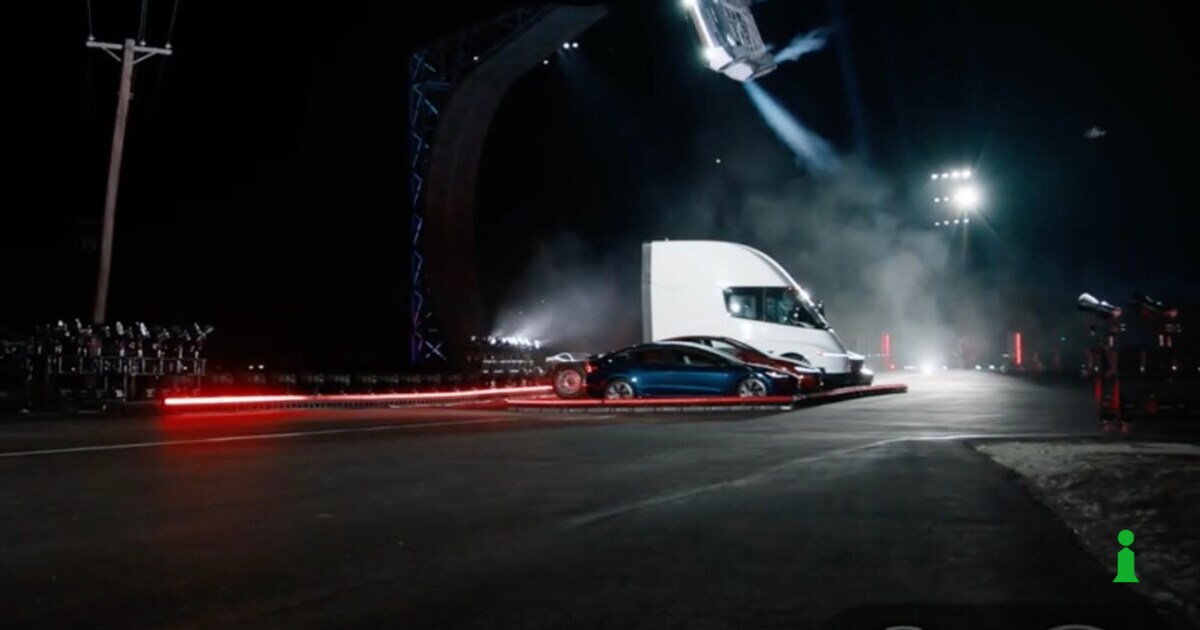
On Thursday night, at a SpaceX facility outside Waco, Texas, Tesla finally showed the world its long-delayed second-generation Roadster. And it did something no production car has done before: it left the ground. Using cold-gas thrusters built with SpaceX rocket technology, the Roadster lifted itself into the air, spun, and settled back onto the tarmac. Elon Musk called it proof that "flying cars are real." Social media, including here in India, has been talking about little else since.
But what exactly did Tesla launch, and what does it mean in practical terms? Here is an honest breakdown.
What Tesla actually showed
The new Roadster is a two-seat electric supercar that Tesla first promised back in 2017. Nine years later, the redesigned car arrives with a stark white, angular design that Tesla says was inspired by the SR-71 reconnaissance aircraft and the F-35 fighter jet.
The headline feature is the SpaceX package. The car carries 10 cold-gas thrusters connected to roughly 600 litres of compressed air stored in carbon-fibre pressure vessels packed into every available space in the chassis. These thrusters let the car accelerate, stabilise itself, and briefly manoeuvre in midair. In the demo, the driverless car drove up an inverted ramp using a suction system that pulls air from beneath the vehicle, launched into the air, flipped, and landed. It also used the thrusters to leap over a line of parked Tesla vehicles, including a Cybertruck and a Semi.
Tesla claims a 0 to 60 mph time of under one second, a top speed above 230 mph, and around 300 miles of range.
Is it really a flying car?
Not in the way most people imagine. The Roadster cannot cruise through the sky or replace your commute. Its flight is closer to a controlled hop: short bursts of lift and rotation, measured in seconds. Tesla itself labels the top "Rocket" trim as "not approved for public road use" and "invite only."
There are three trims. The Performance trim is road-ready with active aerodynamics and the suction downforce system. The Thrust trim adds rear cold-gas thrusters for the sub-one-second sprint. The Rocket trim, with all 10 thrusters, is the one that can leave the ground, and it seats only one.
Production is planned for 2028. Reservations are open at $50,000 for the Performance trim and $250,000 for Thrust, while Rocket remains invite-only. Worth remembering: customers who placed deposits on the original 2017 Roadster waited nearly a decade, and Marques Brownlee publicly wondered whether the whole event was a prank.
The engineering is real, even if the timeline is not
Scepticism about dates aside, the technology on display is genuinely new. Cold-gas thrusters on a road car, a suction system strong enough to hold a 4,000-pound vehicle upside down, and steer-by-wire are serious engineering. Whether or not the Roadster becomes a common sight, components of this work will filter into mainstream EVs, much as racing technology historically has.
What this means for Indian businesses
For most of us in India, the Roadster is a spectacle, not a purchase. But there are useful lessons in how Tesla runs moments like this:
- Engineering as marketing. Tesla spent no money on a traditional ad campaign. One demonstration video generated global coverage within hours. A remarkable product demo is still the strongest marketing asset a company can build.
- Halo products lift the whole brand. Musk himself admitted the Roadster may not move revenue much. Its job is to make every other Tesla feel more advanced. Indian service businesses can apply the same idea with one flagship case study or showcase project.
- Announce carefully, deliver honestly. The 2017 promise and the 2028 timeline are a cautionary tale. Indian buyers, especially in B2B, remember missed deadlines far longer than they remember flashy launches.
- EV and aerospace tech is converging. Compressed-air systems, carbon-fibre pressure vessels and active aerodynamics are crossing between industries. Indian engineering and manufacturing firms should watch this convergence for supplier and talent opportunities.
The bottom line
Tesla did not launch a flying car you can buy and fly to work. It launched an extreme electric supercar that can briefly leave the ground, with production promised for 2028. The internet excitement is understandable, but the honest summary is: remarkable demo, real engineering, unproven timeline.
At VAIR IT Technologies, we help Indian businesses cut through tech hype and focus on what actually grows revenue: fast websites, honest marketing, and software that ships on time. If you want a straight answer on where technology can help your business, book a free consultation with our team.
Cover image: Tesla's new Roadster mid-flight during the demonstration event. Image credit: Tesla.